FIELD NOTES / 002
What Is a Still Life in the Backrooms?
What is a still life in the Backrooms? Learn how the 2026 film uses distorted human copies, why they look wrong, and what the ending suggests.
The phrase Still Life in Kane Parsons’ 2026 Backrooms film does not mean a bowl of fruit, a painting style or an ordinary photograph. In the film’s lore, a Still Life is a distorted copy of a person: the Backrooms appears to reconstruct someone from memory, but the copy is incomplete, misplaced or physically wrong.
That short answer is the useful distinction. Art history uses “still life” for arranged inanimate subjects. Backrooms uses the same words as a name for human-looking imitations that are alive enough to move, react and threaten people. This page discusses plot details from the film, so the sections below contain spoilers.
Still Life Generator is an independent fan-made tool and is not affiliated with the Backrooms film or its producers.
What is a Still Life in the Backrooms film?
The official A24 film page describes Backrooms as the story of a strange doorway in a furniture showroom leading into an endless network of interconnected rooms. Within those rooms, familiar places and people can appear in altered forms.
A fan glossary devoted to Kane Parsons’ version gives the most compact definition: a Still Life is “a copy of a person who has been misremembered by the Backrooms.” The film does not present the Backrooms as a careful photocopier. It recreates things from fragments, associations and imperfect memories, so a result can preserve one recognisable feature while losing normal anatomy, proportion or behaviour.
That is why “copy” should not be read as “clone.” A Still Life is not necessarily identical to the person it echoes. It can resemble a role, an emotional impression or a remembered image rather than the person’s ordinary appearance. The film’s horror comes from the gap between recognition and accuracy: the viewer can see what the copy is trying to be, while also seeing that it has failed.
This idea fits the larger memory language Parsons has used when discussing liminal spaces. Empty corridors and anonymous rooms can feel familiar even when we cannot place them. The film turns that uncertain recognition into a physical threat. A room can be almost remembered, and a person can be almost reconstructed.
Why do Still Lifes look faded or wrong?
A Still Life looks disturbing because it keeps enough human information to be recognisable but loses the details that make a person coherent. Faces, limbs, clothing and posture may seem simplified, misplaced or combined with a remembered role. The result sits between a mannequin, a damaged memory and a living person.
The movie’s visual world applies a similar process to spaces. The Backrooms repeats walls, doors, office lighting and domestic rooms, but removes the normal context that tells us why those places exist. A corridor has no destination. A waiting room has no people waiting. Familiar architecture becomes uncanny through repetition and absence.
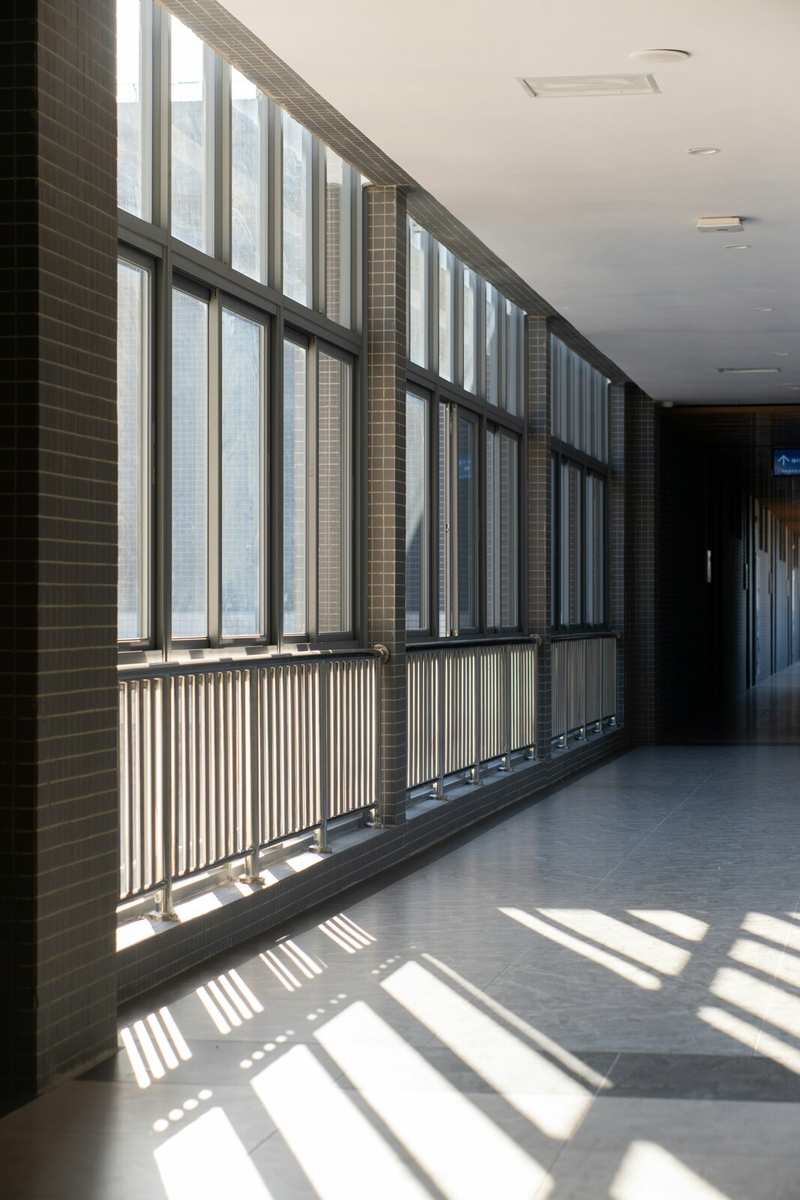
Colour and light reinforce that feeling. Muted surfaces, pale highlights and low-contrast detail make the environment appear drained of ordinary life. However, “Still Life” is not simply the name of a colour filter. In the film it refers to the human copies. The faded visual treatment is part of the atmosphere surrounding them, not the complete definition.
Our browser tool borrows only that visual idea. It reduces colour and contrast in a photograph to make a room feel quieter and less substantial. It does not detect people, recreate memories or produce the film’s creatures. The distinction matters: the movie concept is narrative horror; the tool is a deterministic photo effect.
Which Still Lifes appear in the film?
The film presents several variations rather than one standard monster. The most prominent is Pirate Clark, a large and aggressive copy connected to Clark’s pirate-themed furniture-store persona. The copy retains exaggerated features from that commercial identity instead of reproducing Clark as he normally looks. That makes it a useful example of the Backrooms “remembering” an image or performance rather than recording a body precisely.
Other human-like figures appear around Clark’s reconstructed domestic scene. Some are quieter and more mannequin-like. A red-haired figure is interpreted as an imperfect copy of Clark’s estranged wife, based on the memory and role that Clark is trying to recreate. These scenes show that not every Still Life behaves in the same way. Some remain passive for long periods, while others become violent.
The final image involving Mary expands the idea again. A distorted copy of Mary appears in a recreated room, suggesting that the Backrooms has begun to preserve or reconstruct information associated with her as well. The film deliberately leaves parts of that process unexplained. It is safer to describe the ending as a suggestion about memory and replication, not as a complete set of rules.
Plot guides from TheWrap and JustWatch discuss these copies in detail, but some conclusions remain interpretation. The movie establishes that the figures are misremembered human copies; it does not turn every visual clue into a fixed technical system.
Backrooms Still Life versus still life art
Traditional still life art focuses on inanimate subjects arranged for observation: fruit, flowers, vessels, books, fabric or everyday objects. Artists use those arrangements to study light, texture, colour, composition and symbolism. The subject stays still because it is an object.
A Backrooms Still Life reverses that expectation. Its subject resembles a person, and it may move. “Still” describes its mannequin-like presence, its incomplete vitality and the frozen quality of a bad memory more than a conventional art category. The capitalised term belongs to the film’s lore, while the lower-case art term has centuries of separate history.
The two meanings can overlap visually. A Backrooms scene may have a static composition, restrained colour and isolated objects. A photograph of an empty room can feel like a still life because nothing is happening in it. But that visual resemblance does not make an ordinary still life photograph one of the film’s entities.
This website originally used the phrase for a photo effect inspired by pale, liminal imagery. It does not claim to reproduce the movie’s creatures or official visual effects. When the site says “backrooms still life,” it refers to transforming a real room photograph into a faded study while keeping the source architecture intact.
How to make a Backrooms-style still life image
Start with an interior photograph that already has a strong sense of place: an empty hallway, a room with one bright window, a closed shop or a waiting area. Simple geometry works better than dense clutter because the important lines remain readable when colour and contrast are reduced.
Then decide what must survive. A doorway, chair, ceiling light or reflection gives the viewer one point of recognition. If every edge disappears, the result may look like a blank frame rather than a misremembered space. If too much detail remains, it may look like an ordinary desaturated photograph.
Use the Backrooms Still Life Generator to test four stages directly in your browser. Light keeps strong structure, Caustics introduces soft pools of glow, Reflection lifts shadows and fades objects, and Object pushes the frame towards warm near-white. Your photograph stays on your device, and the tool does not generate people or invent missing scenery.
For a complete workflow, follow how to make a Backrooms still life. If you want to plan the room in words first, the Still Life Text Generator creates an editable prompt, caption and alt text without calling an AI service.
Frequently asked questions
Is a Still Life the same as a Backrooms Life Form?
No. In Kane Parsons’ version, “Still Life” names the misremembered human copies discussed here. “Lifeform” is a broader label used for entities associated with the Backrooms. Different Backrooms canons use different names and rules, so definitions from an unrelated wiki may not apply to the 2026 film.
Are Still Lifes real people trapped in the Backrooms?
The film presents them as copies or reconstructions, not simply the original people wearing altered bodies. Their connection to memories and personalities is important, but the movie leaves room for interpretation about exactly how much of a person is carried into a copy.
Did the term come from traditional still life painting?
The film uses an existing phrase, but its lore meaning is different. Traditional still life concerns arranged inanimate objects. The film’s Still Lifes are distorted human imitations.
Does this website generate the movie creatures?
No. The website applies a local colour-and-contrast effect to a photograph you choose. It does not reproduce actors, creatures or proprietary film imagery, and it is not affiliated with A24 or Kane Parsons.